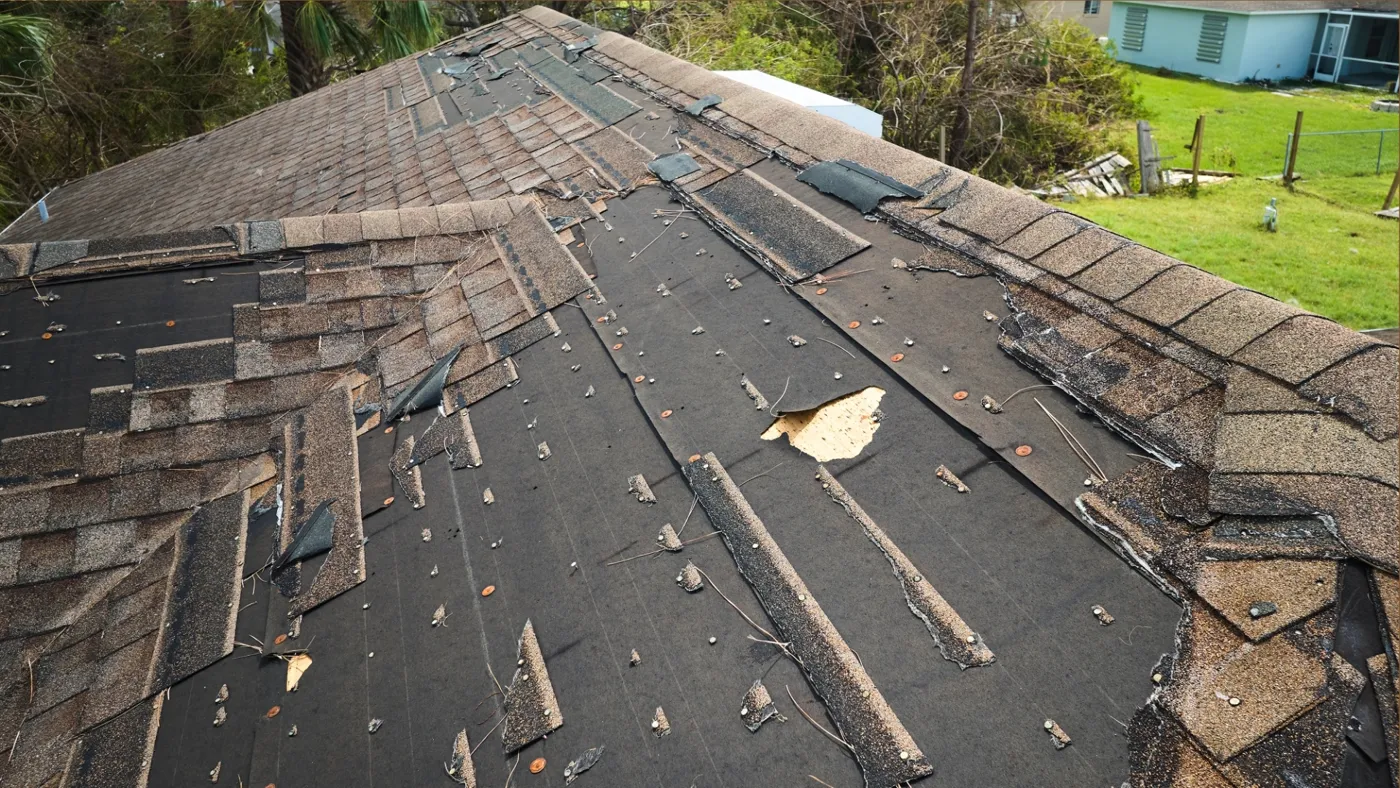
Most roof and gutter failures in a storm come from small weaknesses that were already there, not one catastrophic gust. A loose hanger or a clogged downspout on a sunny day becomes a torn-off section or an overflowing fascia when a tropical system drops inches of rain in a few hours.
Why gutters matter in a storm
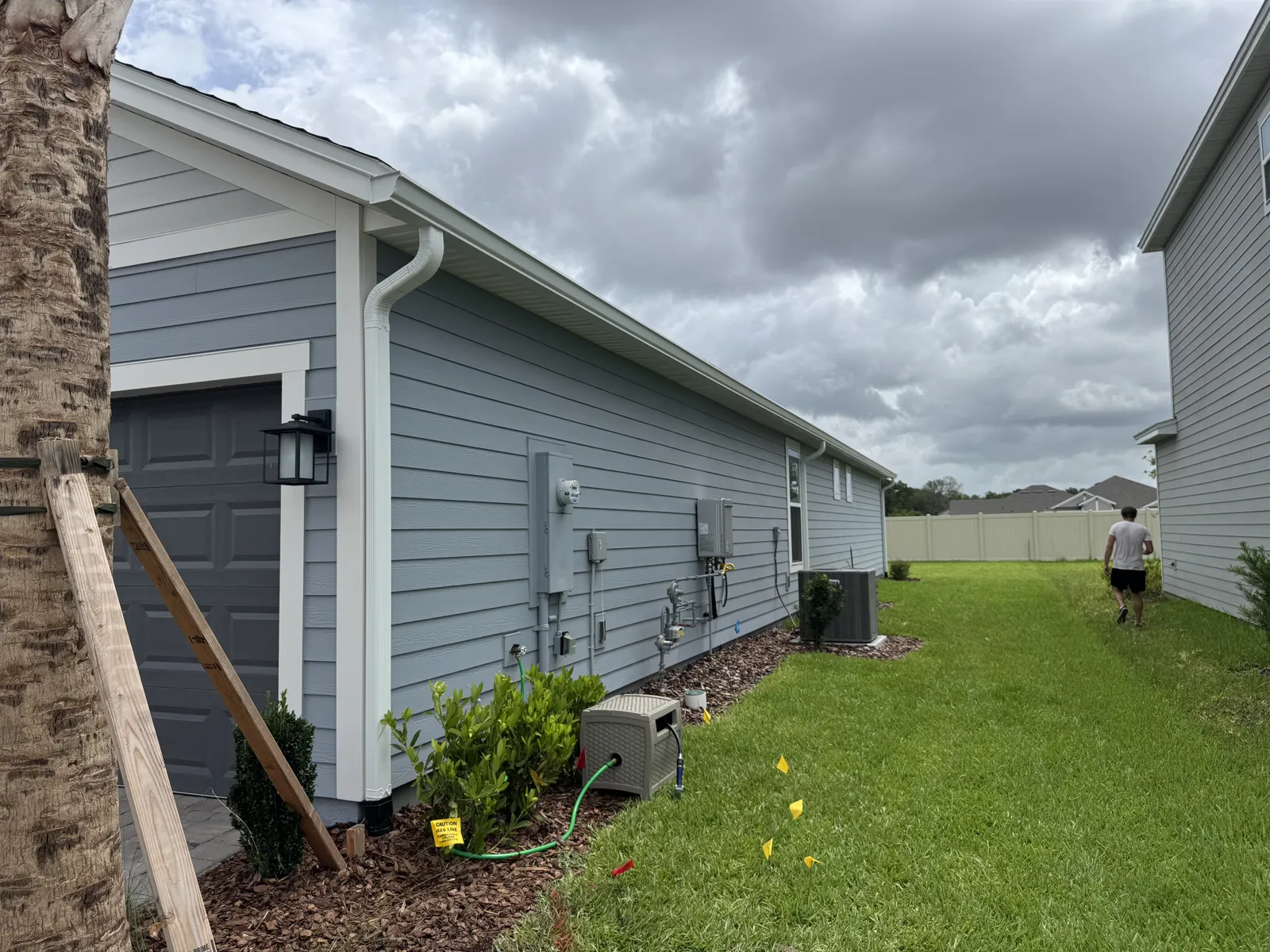
Your gutters are the last line between a roof full of water and your foundation. If they overflow, that volume lands right at the slab or crawlspace. If they pull loose, water runs straight into fascia and soffit.
The checklist
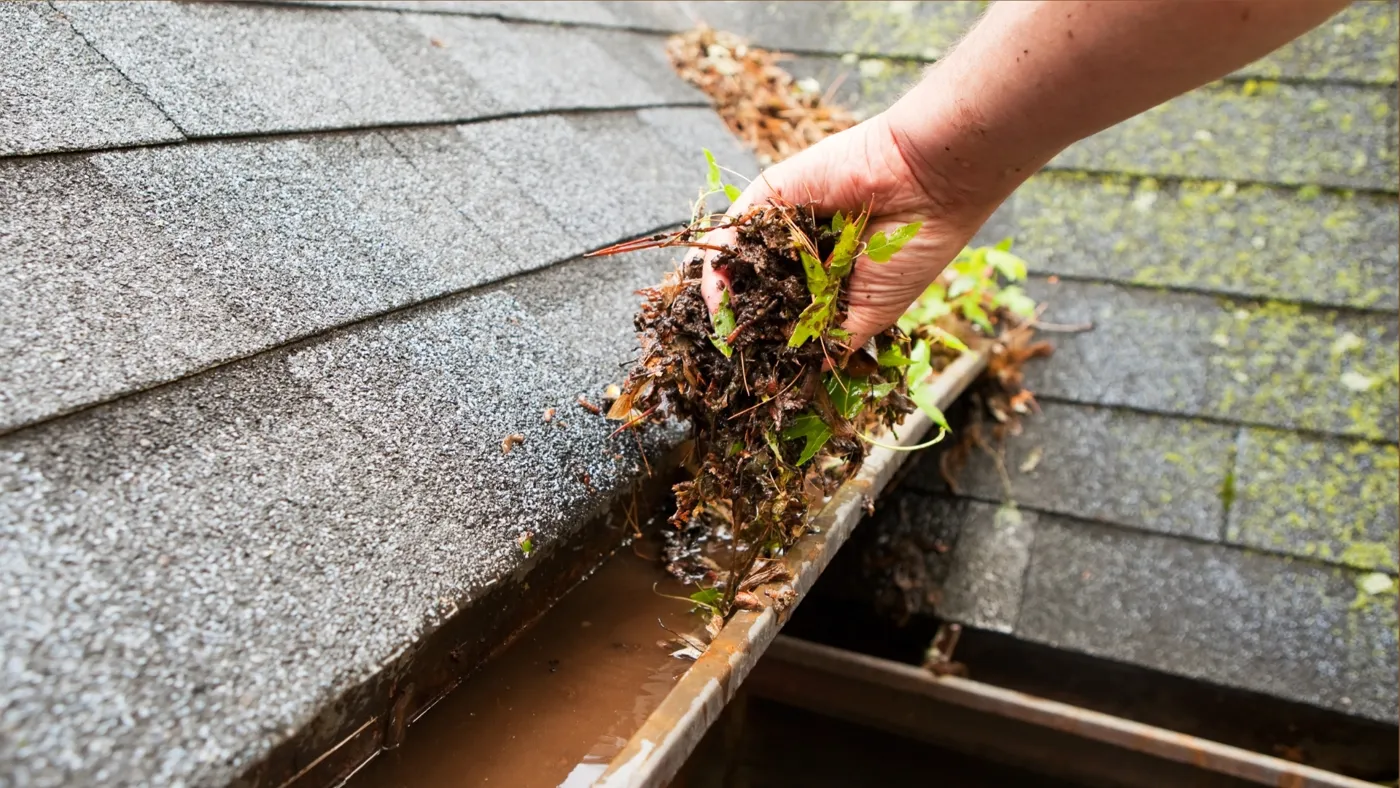
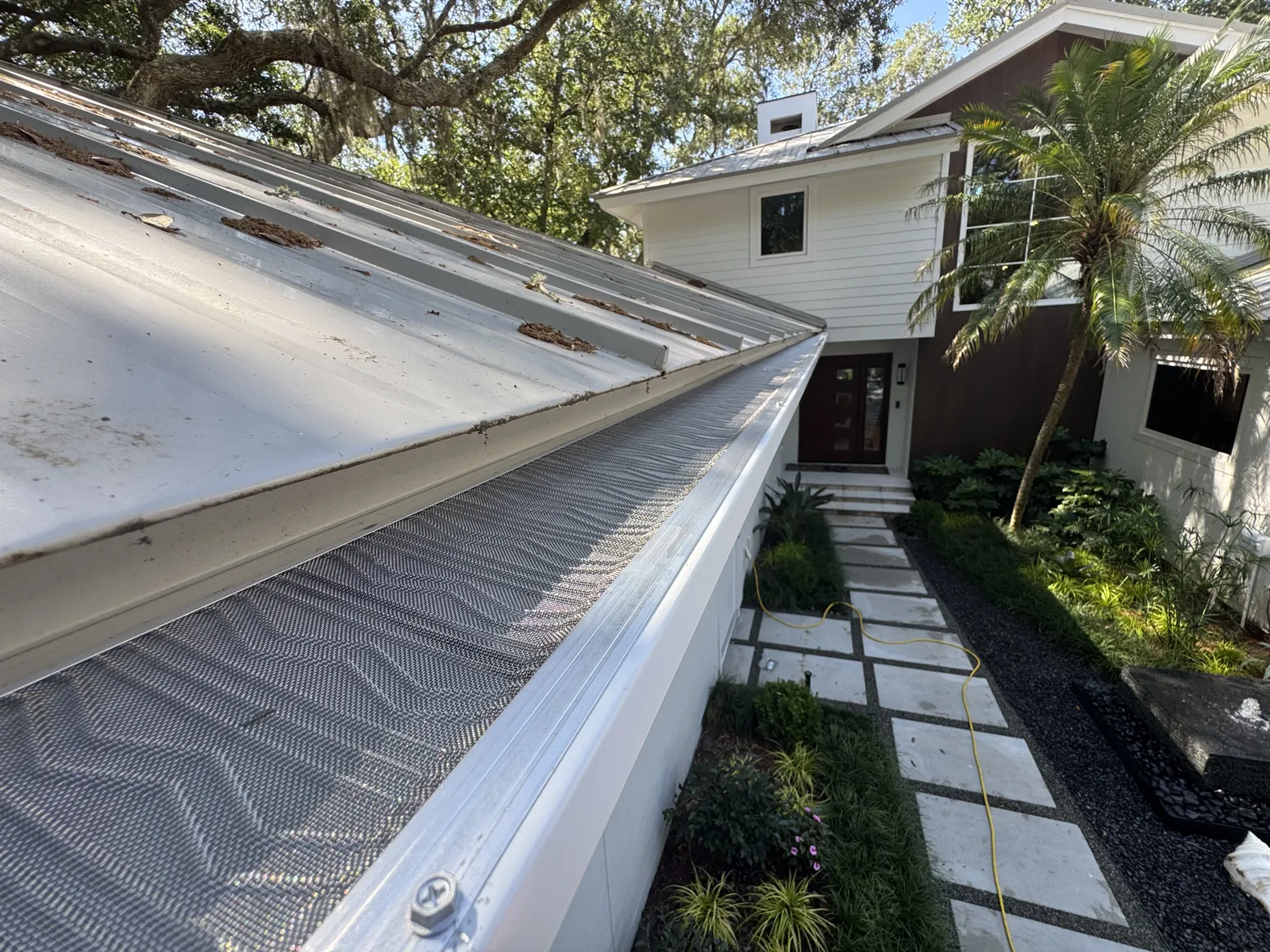
- Clear every run and downspout. Pine needles and oak leaves are the usual culprits here. Flush downspouts with a hose to confirm they drain freely.
- Check the hangers. From a ladder, look for spikes backing out or rusted fasteners, especially within a few miles of the coast.
- Look for sagging. Standing water in a section after rain means it has lost its slope.
- Inspect the corners and outlets. Drips or staining at corners or downspout outlets mean it is time for a repair.
- Extend the discharge. Downspouts should carry water several feet from the foundation. Add extensions or splash blocks where needed.
- Trim overhanging limbs. Branches over the roofline both clog gutters and can come down on them.
Late spring, before the season starts, is the best time to have gutters professionally inspected.
After the storm
Once it is safe, walk the perimeter and look for sections that have shifted, bent, or separated, and clear any storm debris. Loose or damaged sections after a named storm often need more than a quick fix, and if the roof took damage too, LePierre Roofing handles storm damage repair and insurance documentation.
Adapted from the LePierre Roofing blog.