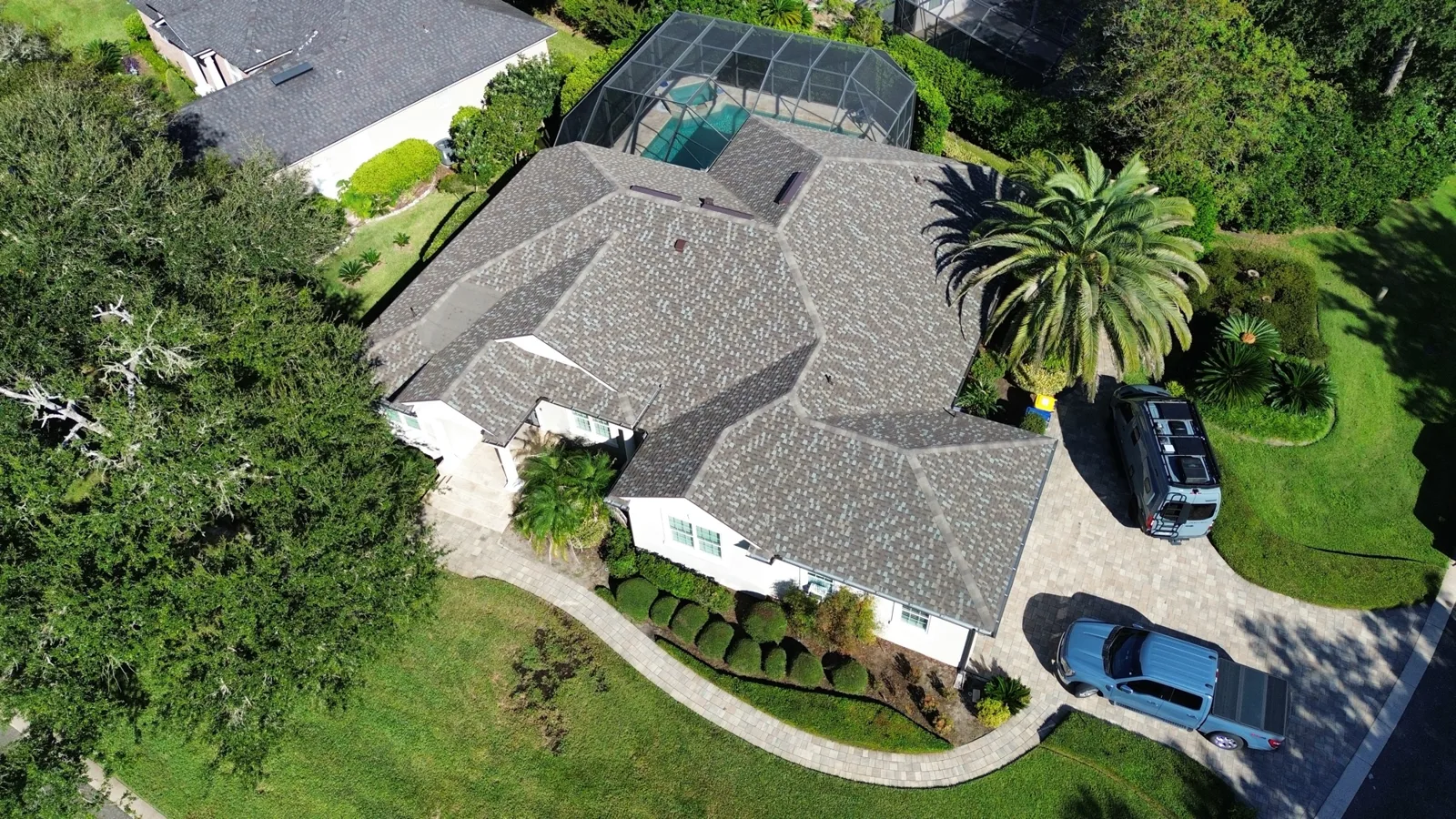
Standing in your yard, it is hard to picture how rain actually moves across your roof. Look at the same home from above, the way a drone sees it, and the whole picture changes. You can see each roof section, where they meet, which way they slope and exactly where water will end up. For homeowners in Fernandina Beach, Amelia Island, Yulee and across Northeast Florida, understanding that view is the first step toward gutters that really work.
The view from above
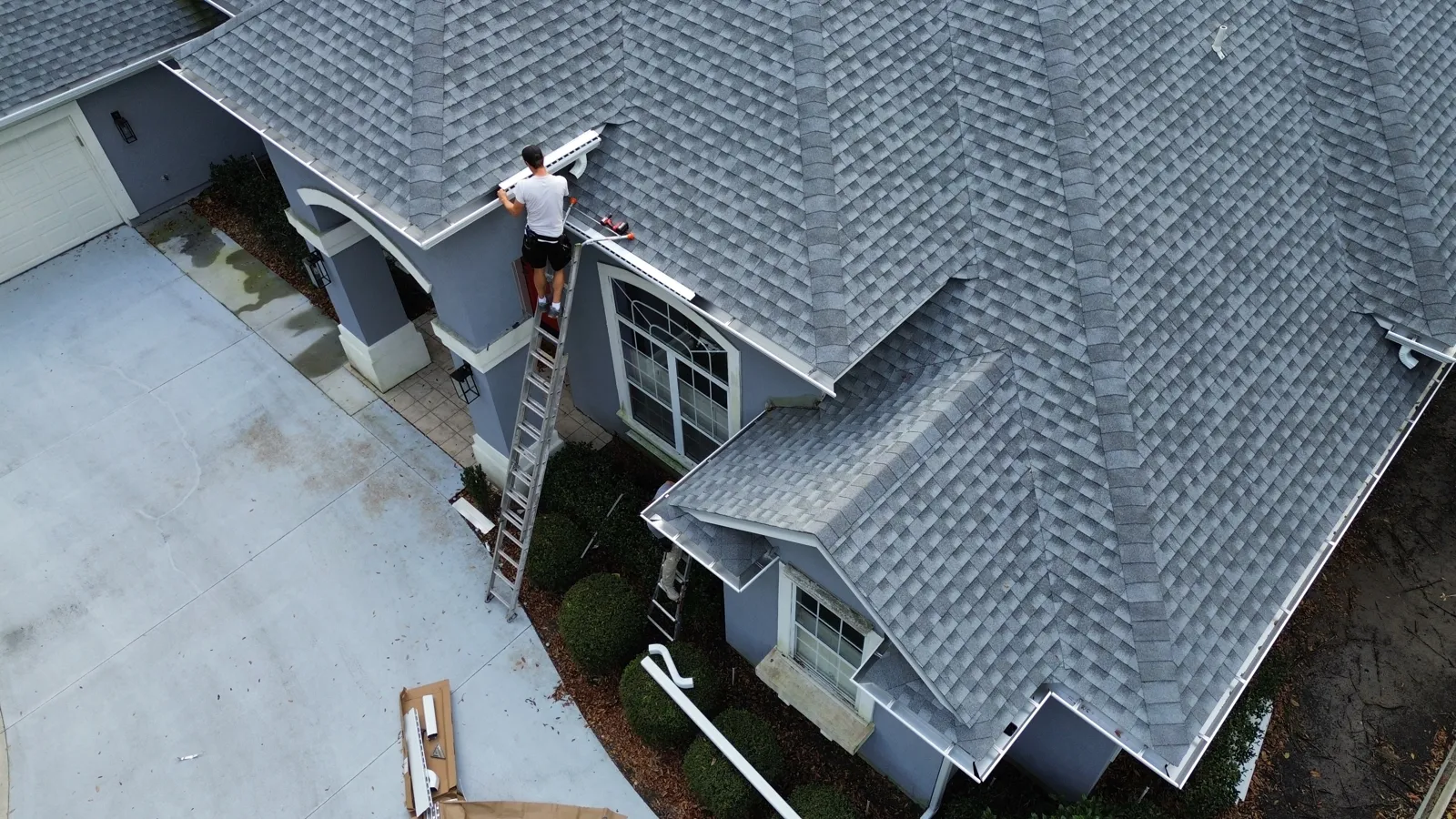
Most homes in our area are not a simple box with two roof slopes. Hip roofs, gables, porch roofs, garage roofs and additions all come together into one roofline. From above, you can see that each section is its own small watershed. Every drop that lands on it travels downhill to one edge, and that edge is where a gutter needs to be ready.
Every slope sends water somewhere
When you look down on a roof, notice how much surface drains toward each side of the house. A large, wide slope sends a lot of water to one gutter run. A small porch roof sends much less. This is why some gutter runs overflow while others never seem to have a problem. The gutter is not the only factor. The amount of roof feeding it matters just as much.
That is a big reason we install 6 inch seamless gutters. The extra capacity gives busy runs more room to handle heavy summer storms without spilling over.
Valleys and inside corners
A valley is where two roof slopes meet in an inside corner. From above, valleys are easy to spot as lines running down the roof. They act like funnels, gathering water from both slopes and sending it to one point at the bottom.
The gutter below a valley often takes more water than any other spot on the house. If you have ever seen water shoot past your gutter at one corner during a downpour, a valley is often the reason. Good planning puts a downspout close by and makes sure the gutter is set to carry that rush of water.
Pool cages, palms and landscaping
The view from above also shows what sits around your roof. In Northeast Florida that often means:
- Pool cages and lanais attached to the back of the house, which need water kept off their screens and decks. Our post on gutters and pool cages covers this in more detail.
- Palms, oaks and pines that drop fronds, leaves and needles into the gutters. A view from above shows which runs sit under the heaviest tree cover, where gutter guards may help most.
- Driveways, walkways and beds where downspout water should not dump.
- Low spots in the yard where water may need to be carried further away with underground drainage.
Turning the view into a plan
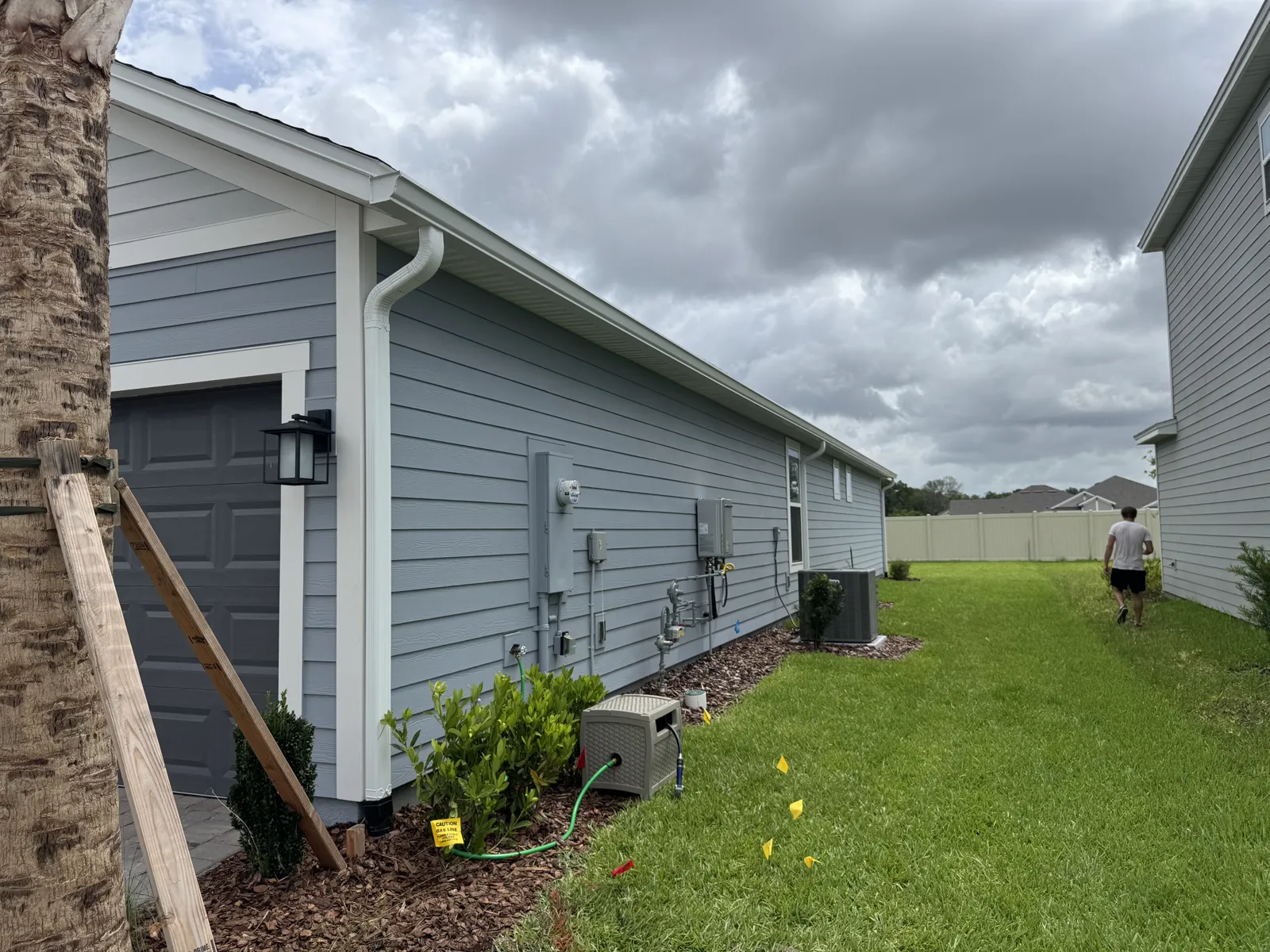
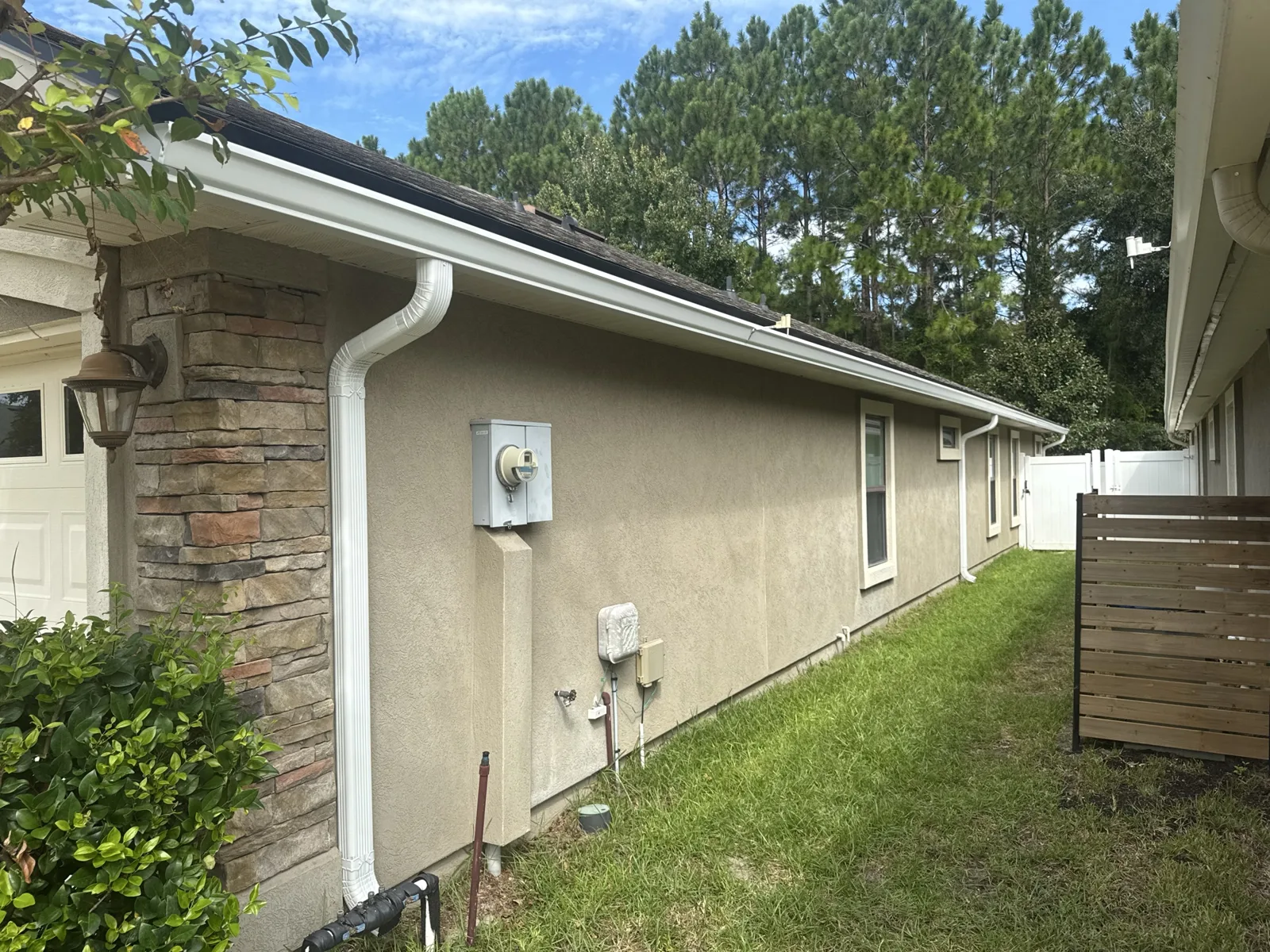
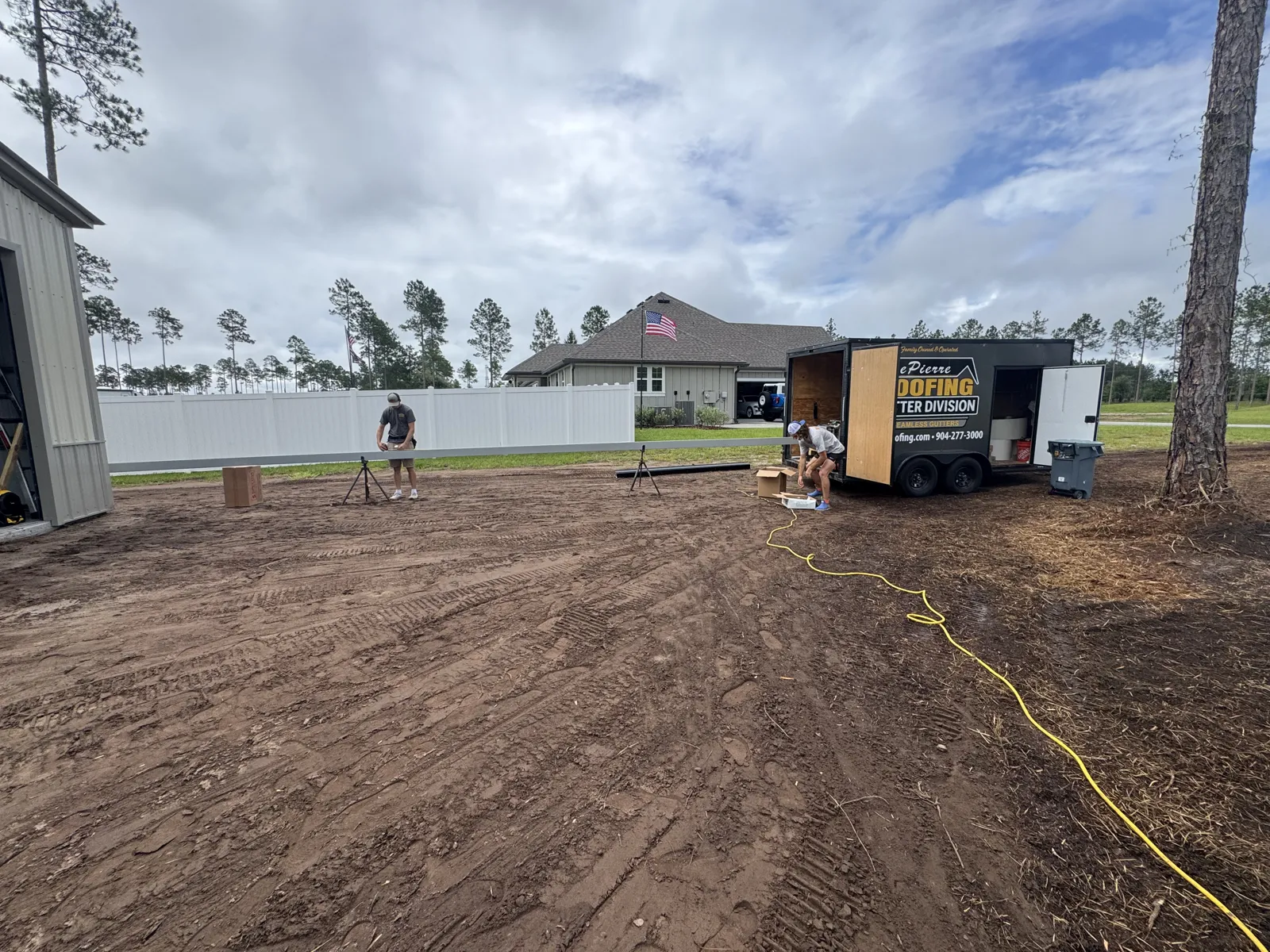
When we plan a gutter system, we think about the roof the same way you would see it from above. We look at which sections drain where, where valleys concentrate water, which runs are long, and where downspouts can release water safely away from the home. Then the 6 inch seamless gutters are formed on site to fit each run of roofline, and downspouts are placed where they do the most good.
The result is a system designed around how your roof actually sheds water, not a generic layout.
Get a roofline review
The LePierre Roofing Gutter Division plans gutters around your whole roofline across Fernandina Beach, Amelia Island, Yulee, Callahan, Hilliard, Jacksonville, Kingsland and St. Marys. Call (904) 277-3000 or request a free estimate and we will show you where your roof sends its water.