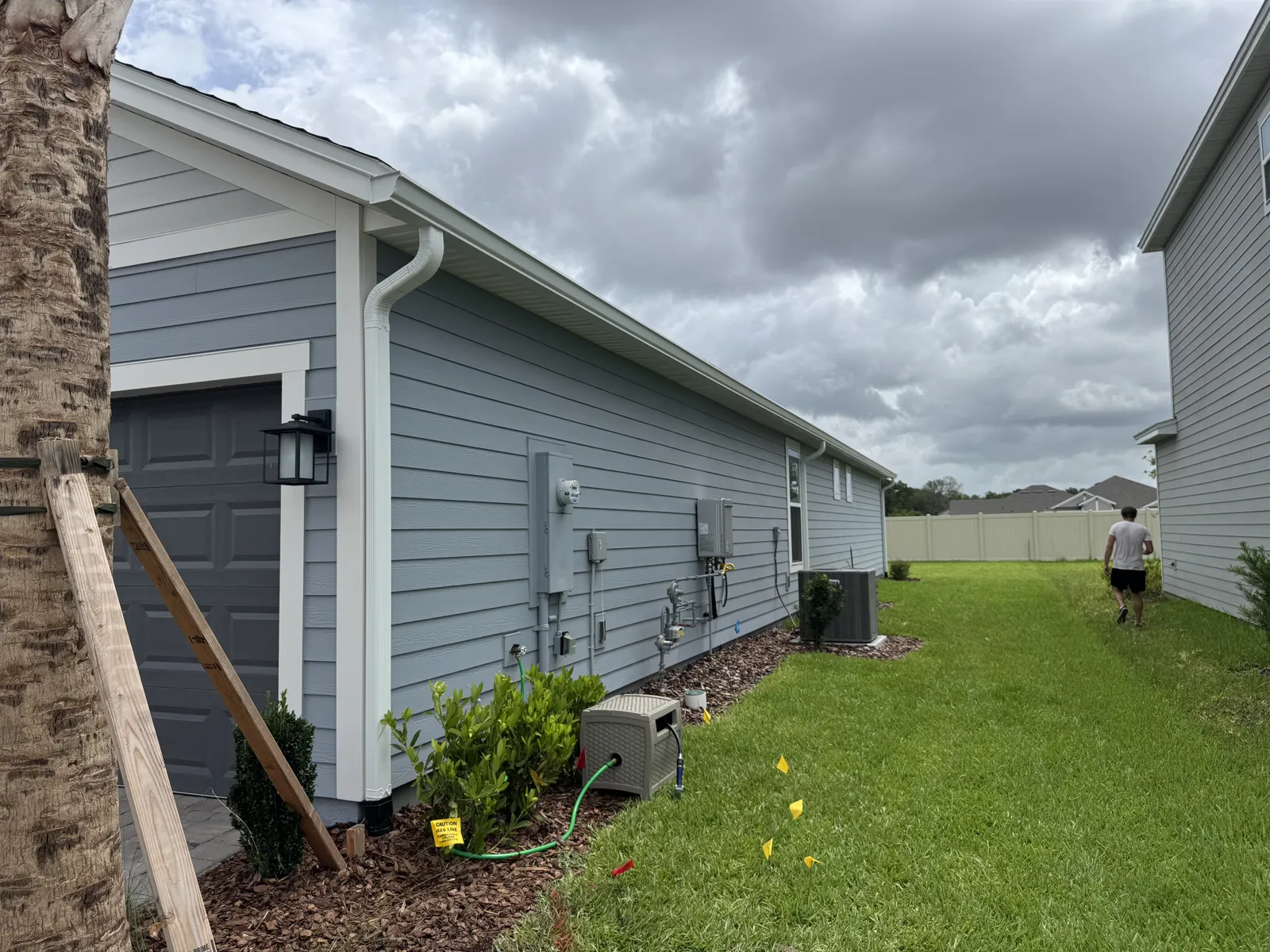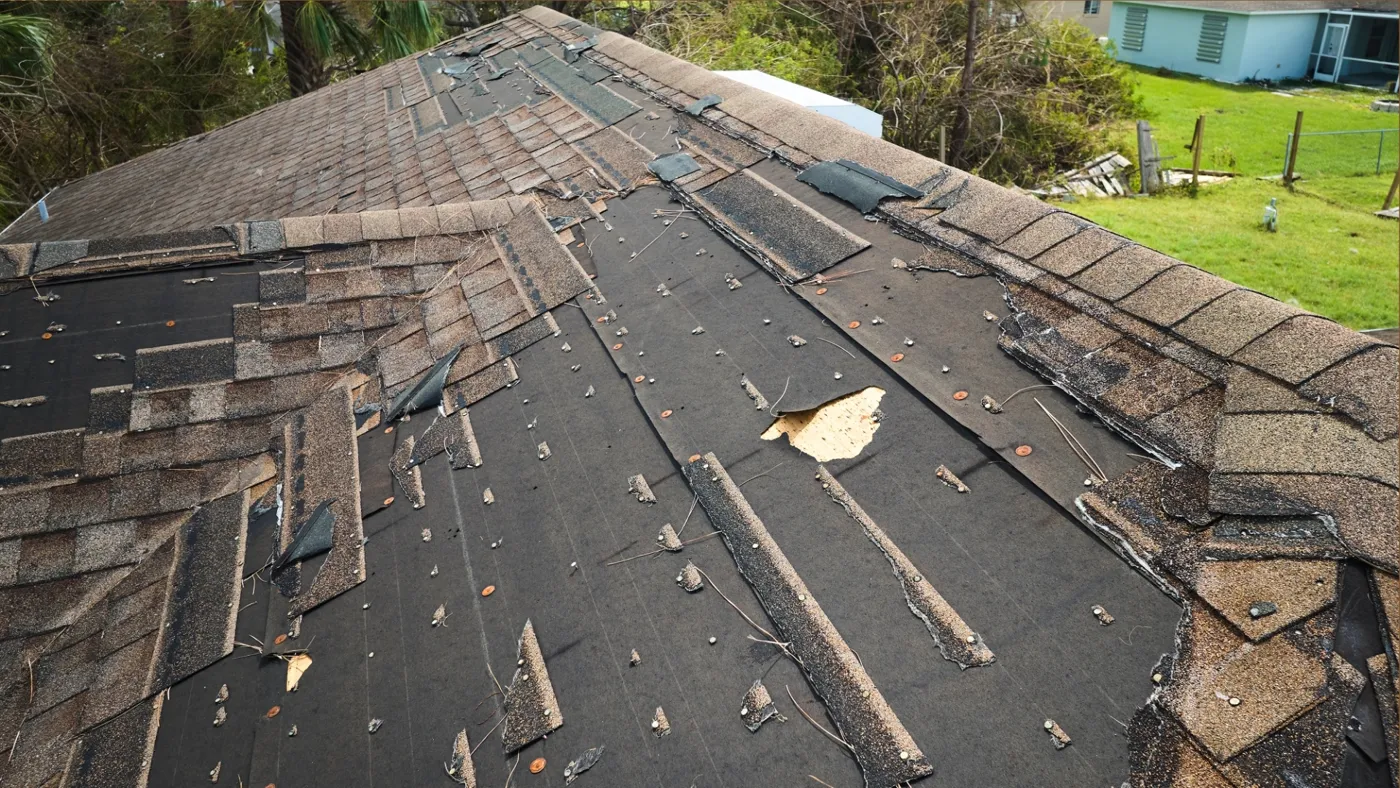
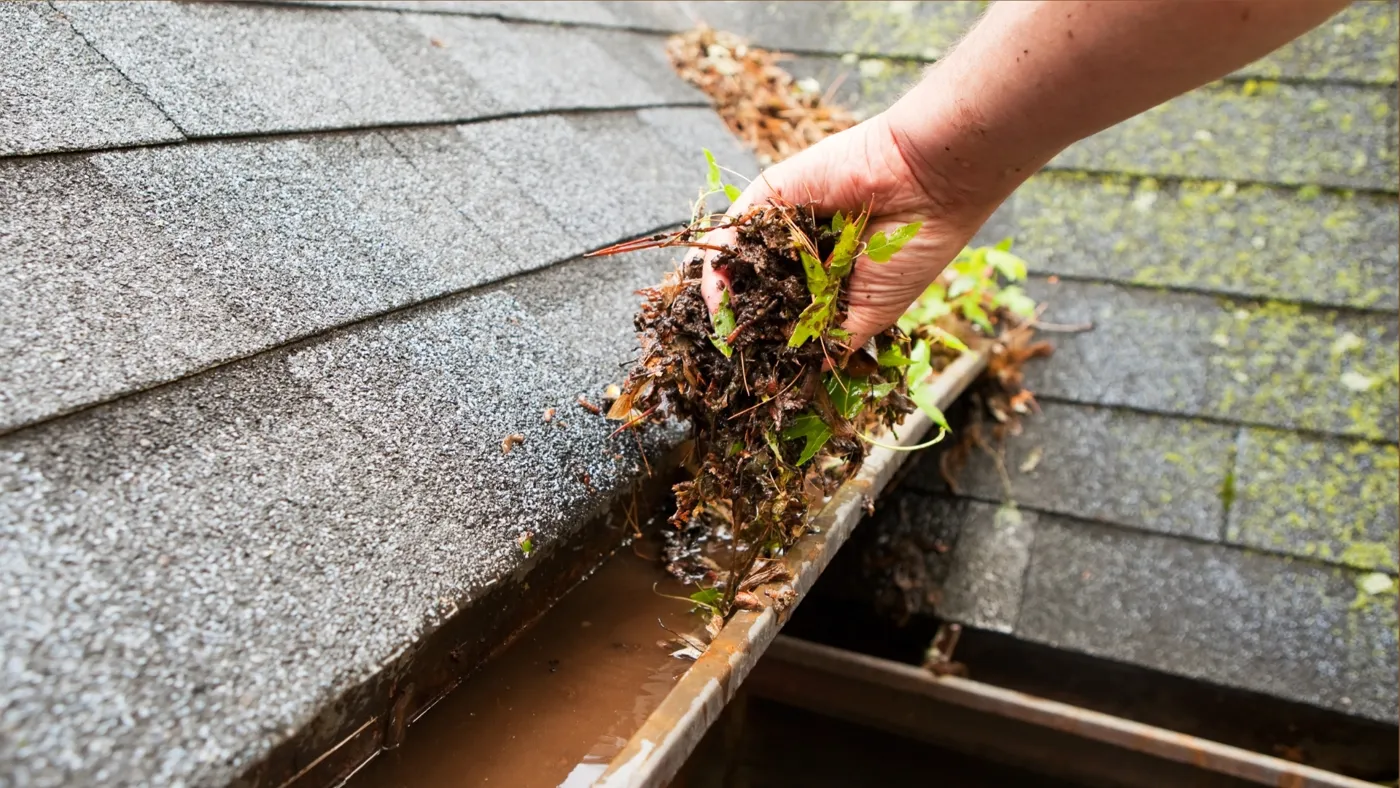
Most homeowners do not think about their gutters until something goes obviously wrong: a section drops in a storm, or water sheets over the edge during a downpour. By then, early fascia rot, foundation moisture, or landscape erosion may already be underway. Here are the five signs worth catching early.
1. Water overflowing the front during rain
The usual causes are a blockage, a sagging section that has lost its slope, or gutters undersized for the roof area they drain. With summer storms here delivering two to three inches of rain an hour, repeated overflow saturates soil at the foundation and can contribute to erosion, cracking and settling.
What to do: have the system cleaned and inspected. If it still overflows after a thorough cleaning, the problem is slope or sizing.
2. Gutters pulling away from the fascia
Look for gaps between gutter and fascia board, sections tilting outward, or spike heads backing out. Debris weight is a common cause, and near the coast, salt air can eat through standard zinc-coated fasteners within a few seasons. Water then runs into the gap, which is one of the most direct routes to fascia rot.
What to do: a few sections can often be re-secured with proper hardware. If the fascia behind is soft, it has to be repaired first.
3. Peeling paint or staining on fascia or siding
Staining below the roofline usually traces back to a leaking joint, a separated section, or overflow running back against the house. In our humidity, repeated wetting and drying rots wood faster than in drier climates.
What to do: fix the gutter before you repaint. Painting over active moisture only hides the problem while rot continues underneath.
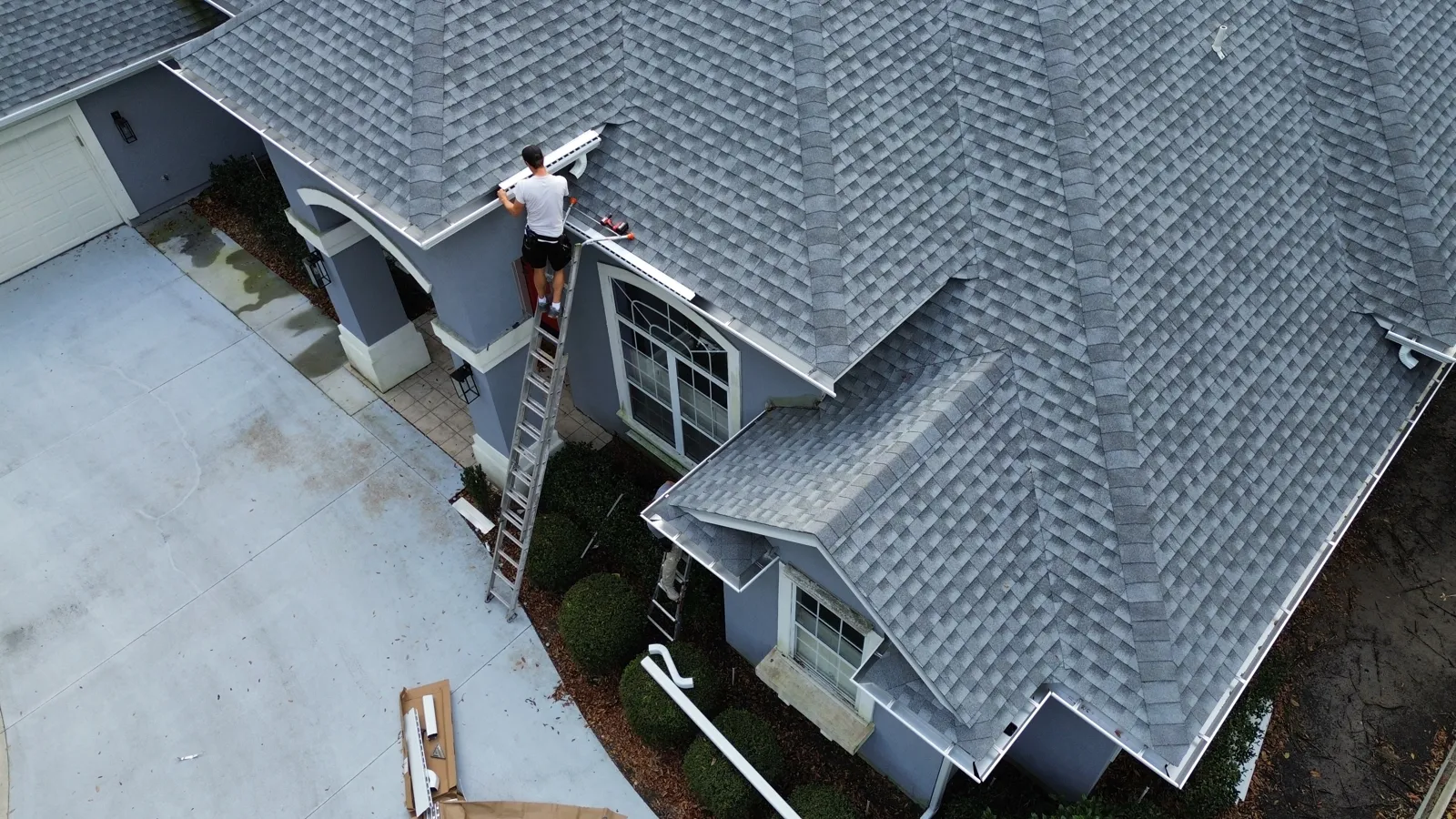
4. Granules or debris after every rain
If gutters cleaned in spring are full again in weeks, the slope may be wrong and debris is settling instead of flushing. Pine needles are especially tough: when wet, they compact into dense mats water cannot pass through. Lots of shingle granules can also mean the roof itself is shedding, which is worth a separate look.
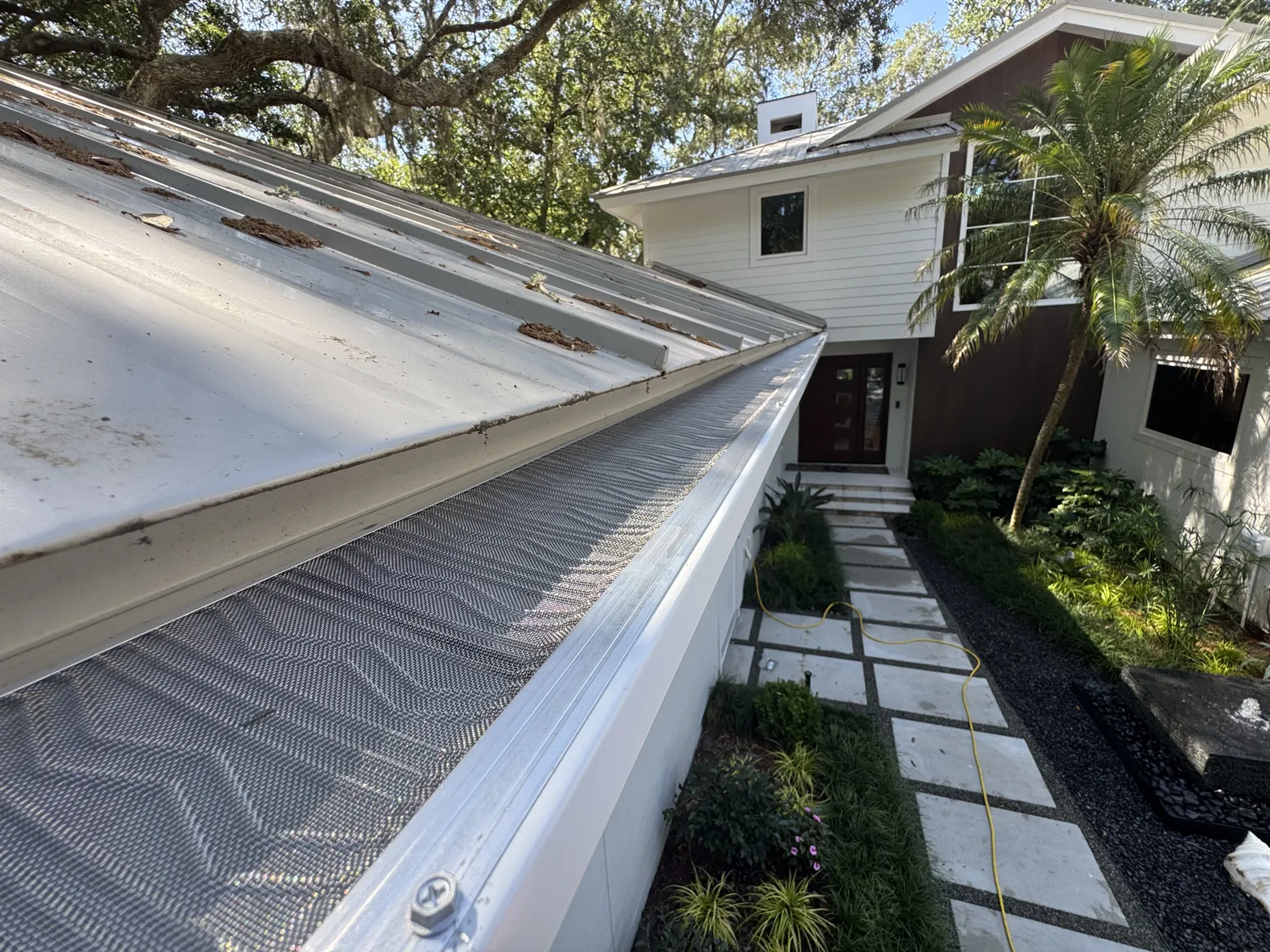
What to do: have slope and drainage checked, and consider gutter guards.
5. Your gutters are more than 20 years old
Age alone is not a reason to replace. But properly installed seamless aluminum typically lasts 20 to 30 years here, so a system at or past 20 deserves a professional inspection even without obvious problems. Corroded hangers and gradual slope loss can all lead to a sudden failure in a big storm.
What to do next
Start with a professional inspection. We offer free gutter inspections: we check every section, joint and hanger, explain what we find, and give you a written assessment. We recommend repair when repair will solve it, and we will tell you plainly when replacement makes more economic sense. It is a diagnostic step, not a sales pitch.
Frequently asked questions
- Can I repair instead of replace?
- Often, yes, when damage is isolated, the system is under about 15 years old, and the hardware is sound.
- How often should gutters be inspected?
- At least once a year, ideally in late spring before hurricane season. Homes with heavy tree cover benefit from a second check in fall, and every system should be checked after a named storm.
- What happens if I ignore failing gutters?
- Damage compounds: erosion and soil saturation, then foundation issues, fascia rot that can spread to soffits and decking, and standing water that breeds mosquitoes.
Adapted from the LePierre Roofing blog.