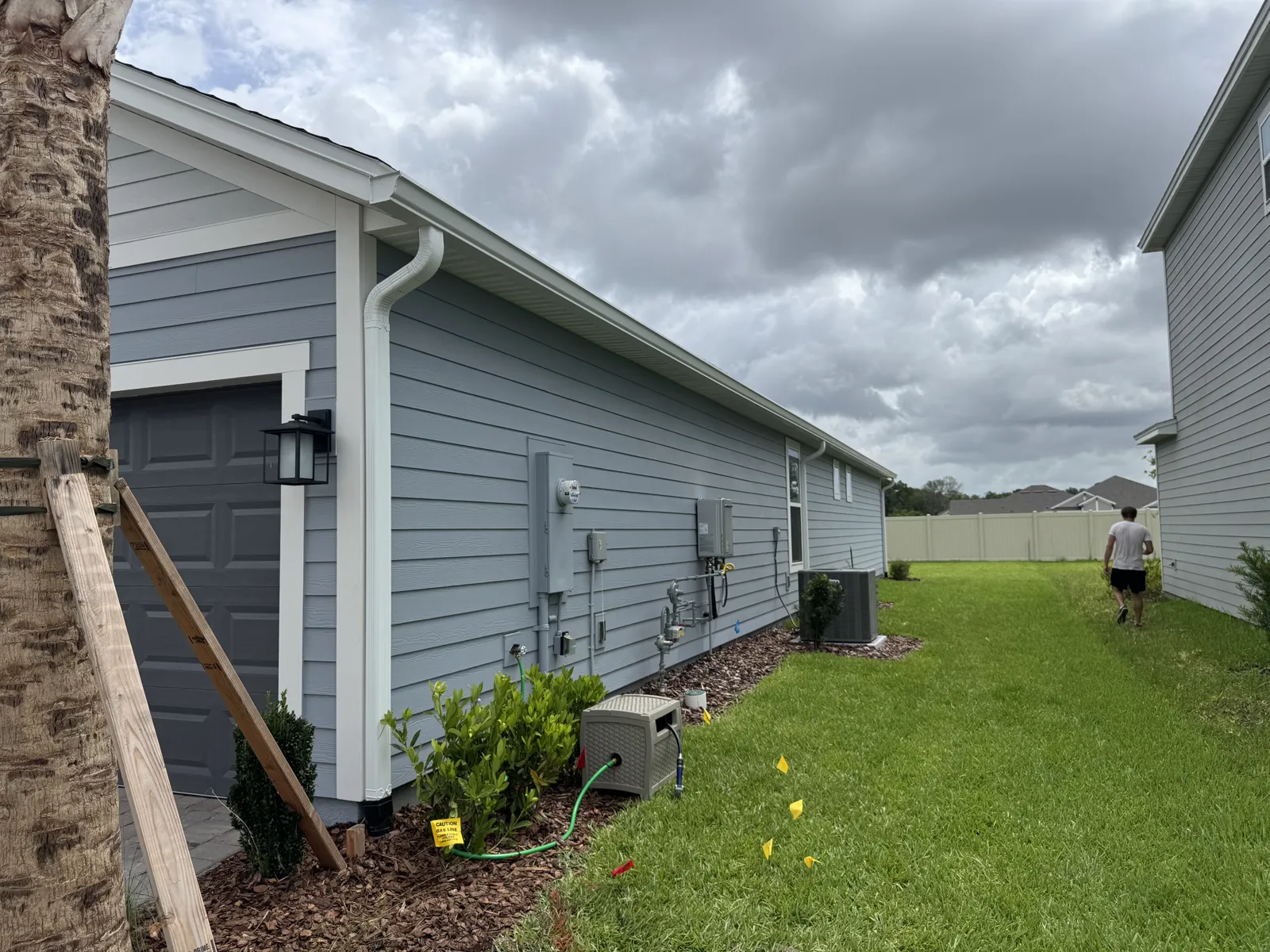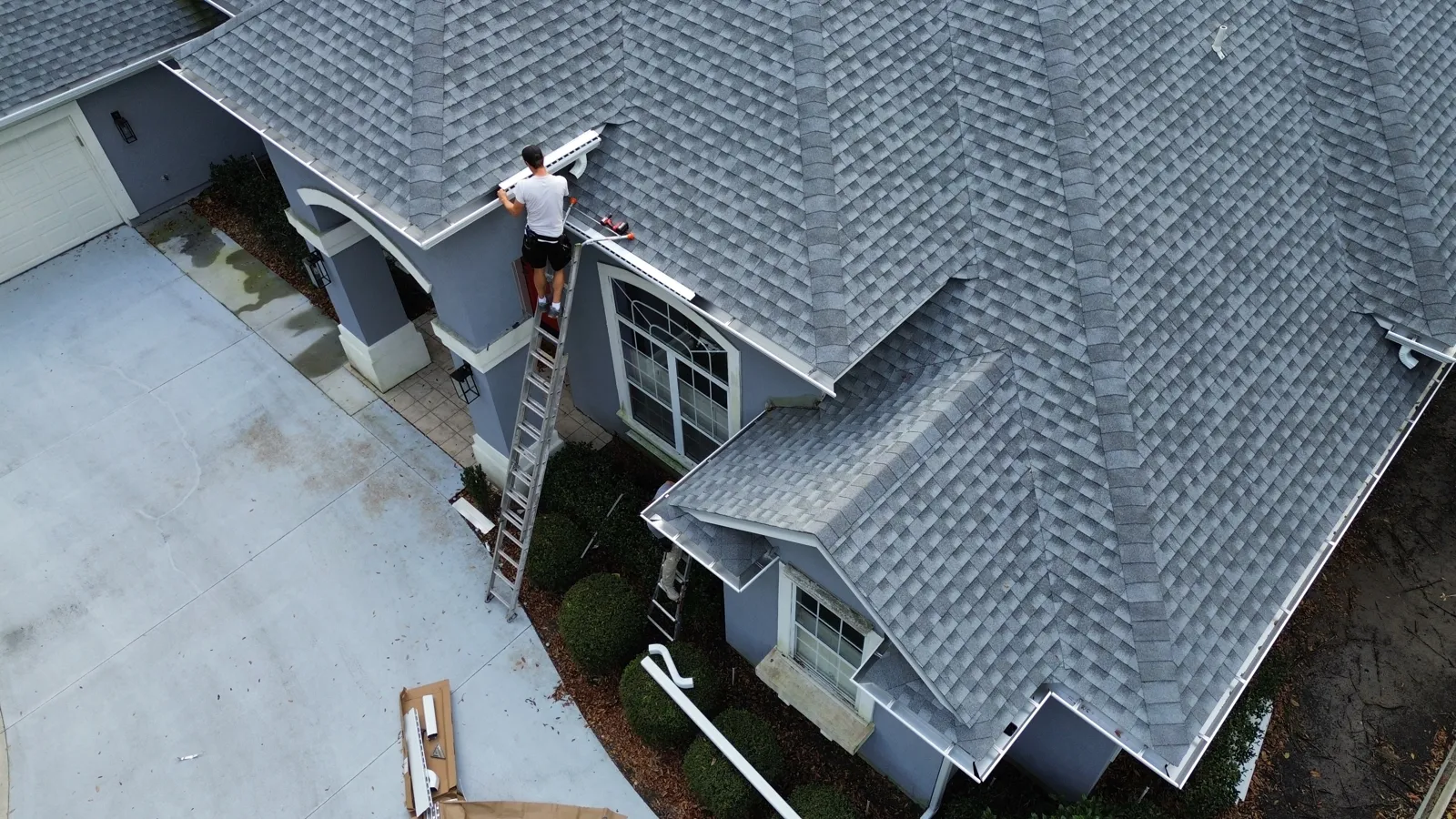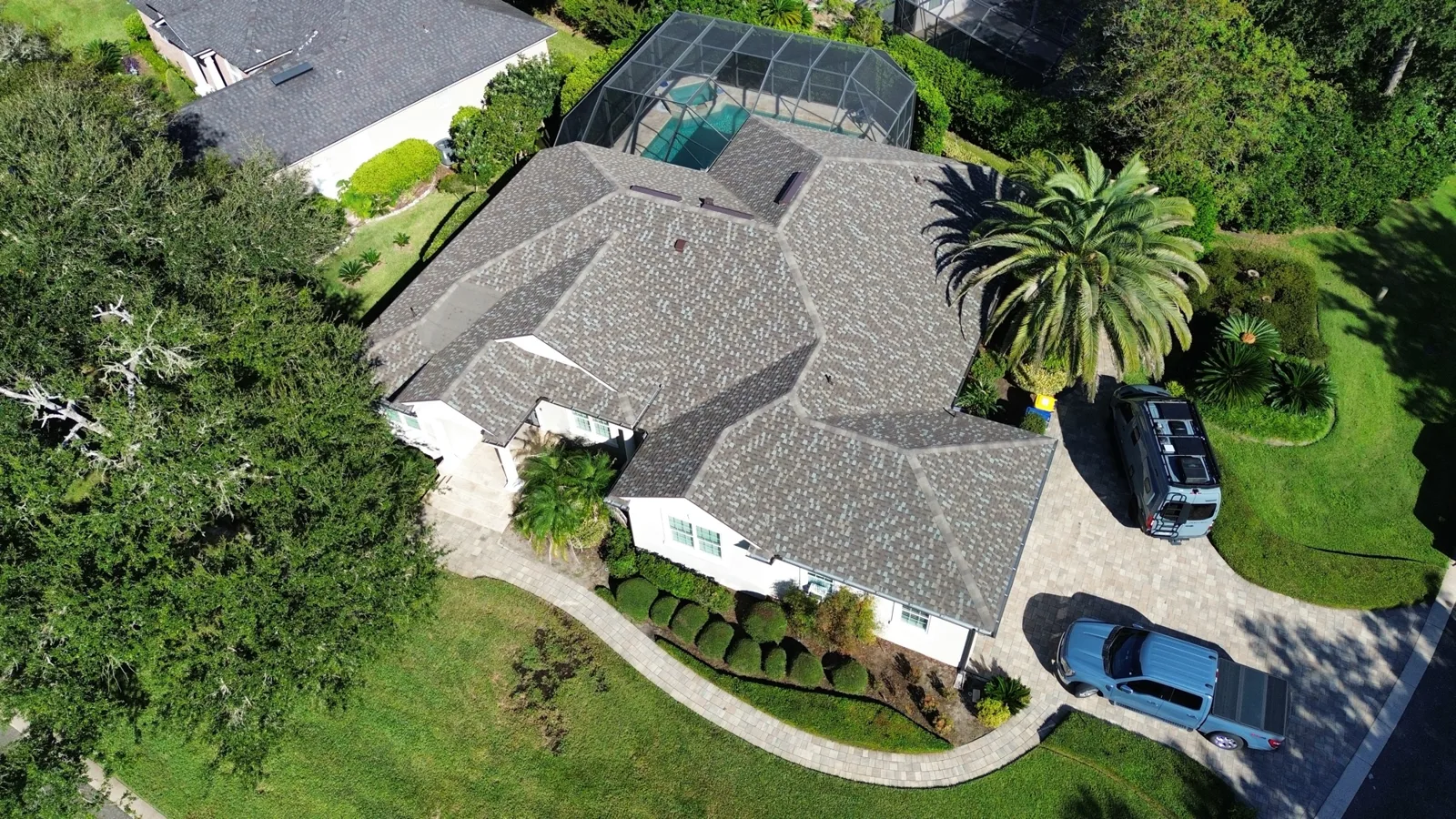
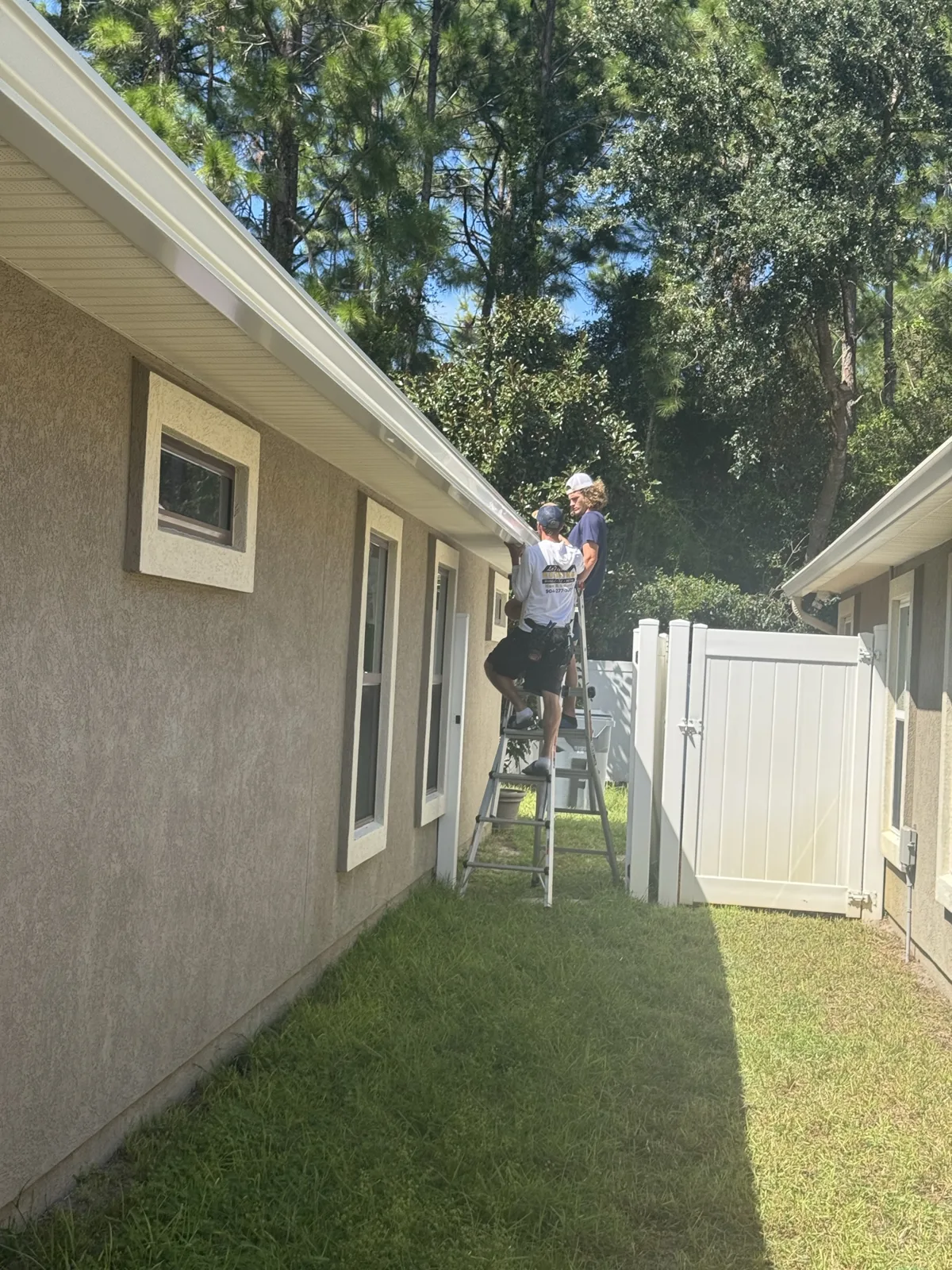
Drive through many newer neighborhoods in Yulee, Fernandina Beach or Jacksonville and you will notice homes built close together. The narrow strip of grass between houses may look like a small detail, but it is often where drainage problems start. Two roofs can send water into the same tight space, and with nowhere to go, it soaks the ground right next to your foundation. Here is how the LePierre Roofing Gutter Division approaches gutters on homes with narrow side yards.
Why side yards stay wet
A side yard collects water from more places than you might think:
- Your own roof, especially if a long run of roof drains toward that side.
- The house next door, whose roof and downspouts may also empty into the same space.
- The ground itself. Side yards are often flat or slope toward the house, so water sits instead of draining.
- Shade. With little sun reaching between homes, wet ground takes longer to dry out.
In Northeast Florida, where summer storms can drop heavy rain quickly, a side yard without a plan can turn soggy after nearly every afternoon shower.
Signs of a side yard problem
- Standing water or soft, muddy ground along the side of the house after rain.
- Splash marks, dirt or mildew on the lower part of stucco or siding.
- Moss, algae or bare patches where grass will not grow.
- Mulch or rock washed out of beds along the wall.
- A gate or fence that stays wet or starts to rot at the bottom.
Planning gutters for tight spaces
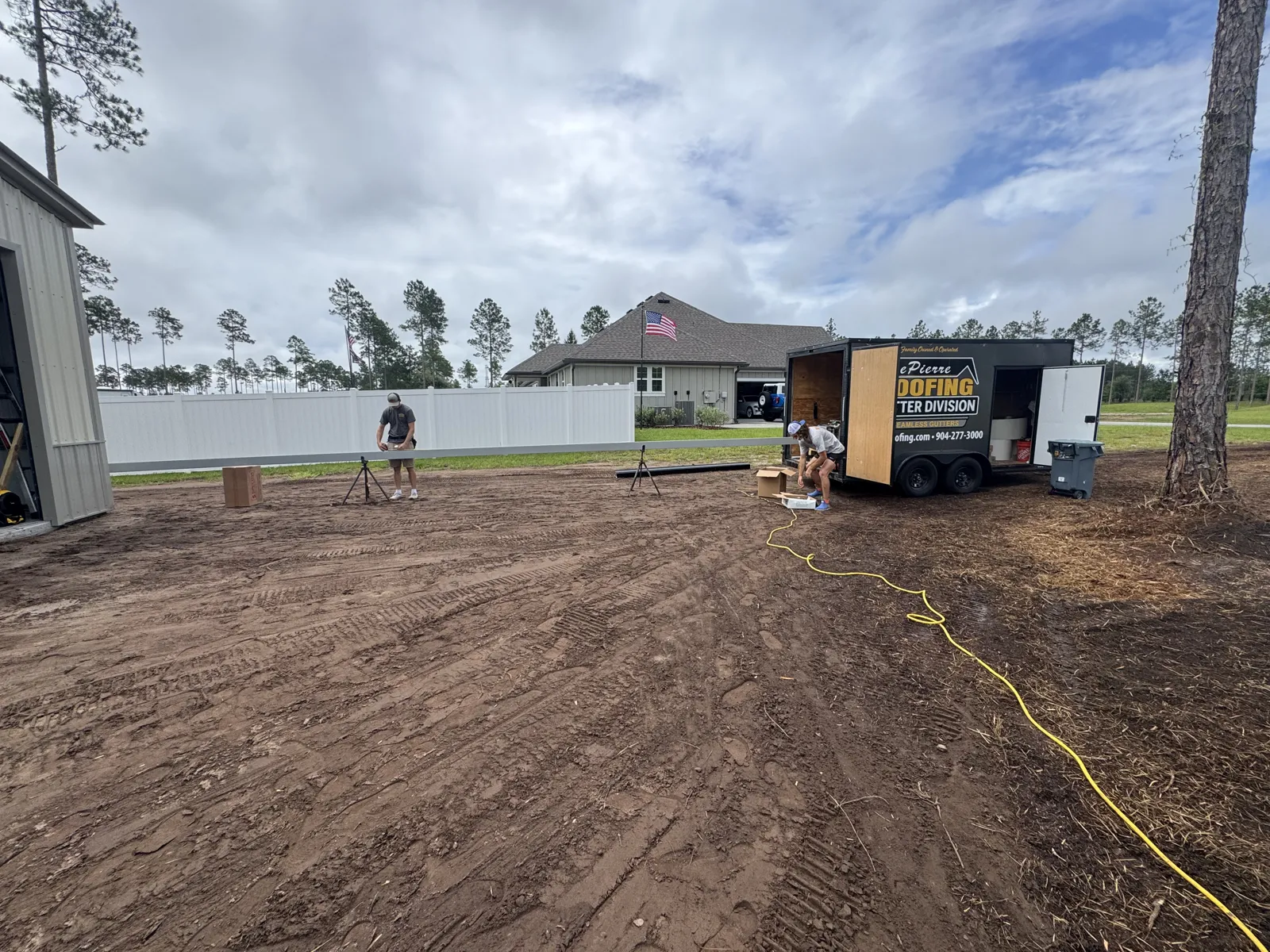
On a home with a narrow side yard, gutters do more than catch water. They decide where that water ends up. Our 6 inch seamless gutters are formed at your home to fit each run of roofline, and that gives us room to plan how water moves along the house.
Sometimes the best plan is to carry water along the gutter toward the front or back of the house, where there is more open yard, instead of dropping it into the side yard at all. Other times a side downspout makes sense, as long as the water has a clear path away from the foundation.
Smart downspout placement
In a tight side yard, every downspout location matters. A few things we look at:
- Where the ground slopes. Water should be released where it will flow away from the home, not back toward it.
- Walkways and gates. A downspout that empties across the only path to the backyard creates a wet, slippery spot.
- Air conditioning units and equipment. Many side yards hold AC units, pool pumps or meters. Water should be directed away from them.
- Your neighbor. Good drainage keeps water on your side moving away from both homes.
When water needs to go further
If there is simply no good spot to release water in the side yard, it may need to be carried out of that space entirely. Downspout extensions can help in some cases. For a cleaner and more permanent solution, underground drainage moves water through a buried line to the front or back yard, where it can drain away without soaking the side of the house.
Keeping gutters clear matters too. Side yards often sit under trees, and clogged gutters overflow right where the space is tightest. Our post on gutter guards and pine needles covers ways to cut down on that.
Get a side yard plan
The LePierre Roofing Gutter Division plans gutters and downspouts around your actual yard, not a one size fits all layout. We serve Fernandina Beach, Amelia Island, Yulee, Callahan, Hilliard, Jacksonville, Kingsland and St. Marys. Call (904) 277-3000 or request a free estimate and we will walk your side yards with you.